What a Dyehouse Bioscouring SOP Should Control
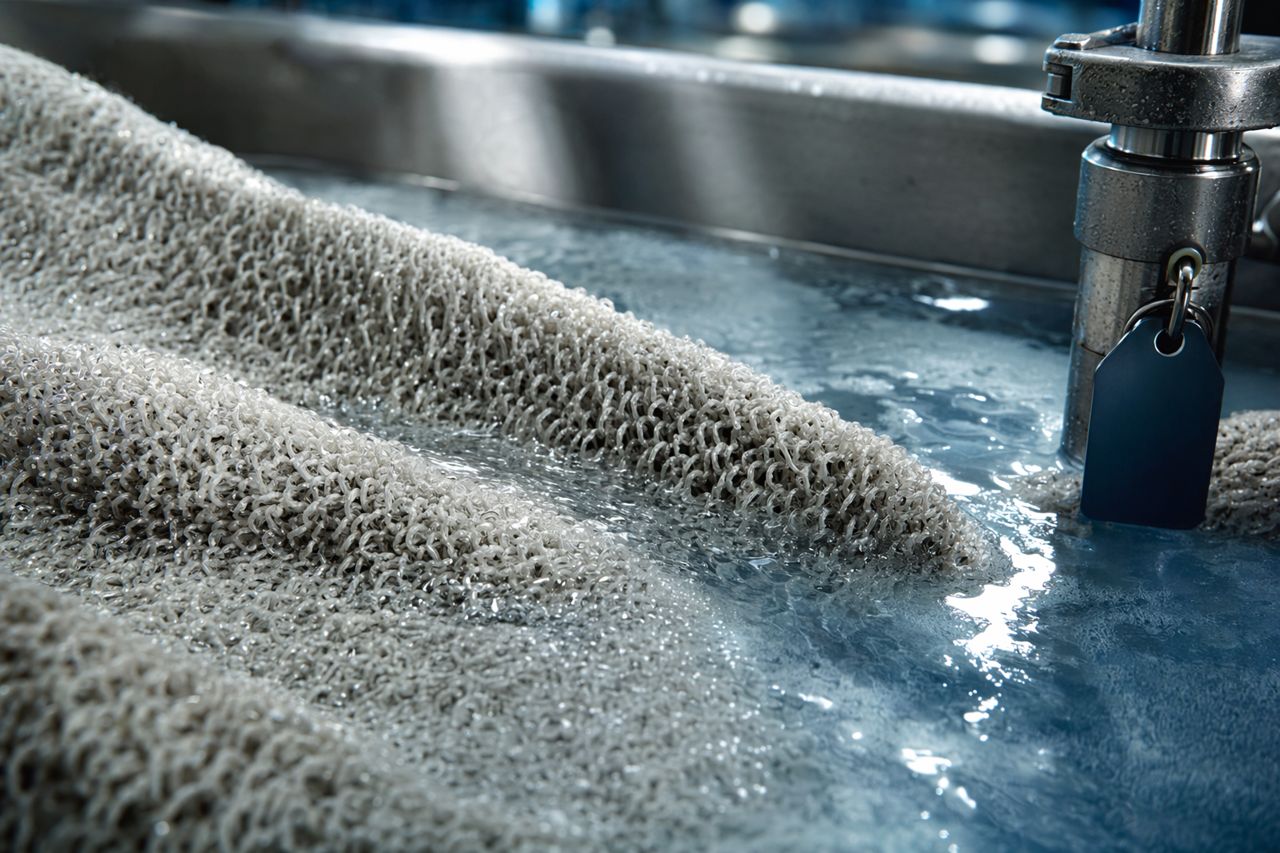
In cotton knit dyeing, bioscouring is not just a preparation step. It decides whether the fabric takes water evenly, whether the dye recipe behaves as expected, and whether the first bulk lot stays close to the approved standard.
A practical SOP should do more than name an enzyme and a hold time. It should define the process controls that keep wax removal, wetting, rinsing, and downstream shade performance inside a repeatable window.
For dyehouse teams comparing an enzyme supplier for cotton bioscouring, the right question is not only “Will it scour?” The better question is: “Can this chemistry fit our machines, recipes, quality checks, and rework targets?”
Why bioscouring SOPs fail on the floor
Most bioscouring variation comes from small gaps between the written method and the real machine condition. Common causes include:
- Fabric entering the machine with inconsistent storage moisture, knitting oil load, or previous handling history
- Water quality shifts that change wetting and rinse behavior
- Enzyme addition before the bath is stable enough for repeatable action
- pH or temperature drift during circulation
- Excess foam reducing liquor contact and fabric movement
- Weak endpoint checks that allow partially wetted fabric to move into dyeing
- No feedback loop between absorbency results and shade outcomes
A useful SOP makes these points visible before the dye cycle carries the problem into bulk production.
The controls a dyehouse bioscouring SOP should define
1. Fabric entry condition
The SOP should specify how the lot is identified before loading: fabric construction, weight range, pretreatment history, oil risk, storage condition, and any known contamination risk.
This matters because cotton knit fabric is not a neutral substrate. Waxes, pectins, knitting oils, and handling residues affect wetting speed and fabric-to-liquor contact. If entry conditions are not recorded, the team cannot separate enzyme performance from incoming fabric variation.
A strong SOP includes:
- Lot identity and construction
- Greige fabric age or storage note
- Known oil or softener exposure
- Previous wet processing, if any
- Risk flag for compact knits, heavy constructions, or uneven greige wetting
2. Machine readiness and liquor movement
Bioscouring depends on even contact. The SOP should confirm that the jet, winch, or soft-flow machine is clean, filled correctly, and circulating without rope hang-up or dead zones.
For cotton knits, mechanical action is a control point, not a background condition. Poor rope movement can leave one section under-scoured while another section receives excess exposure. The SOP should require a circulation check before enzyme addition and a visual foam observation during the run.
Define:
- Machine cleanliness before loading
- Liquor level or ratio according to the site standard
- Circulation confirmation before dosing
- Rope movement acceptance criteria
- Foam observation and escalation action
3. Water quality and bath starting condition
Water hardness, alkalinity, and residual process chemicals can affect wetting, enzyme stability, and rinse demand. The SOP should define the required starting water checks and the corrective action if the bath is outside the approved window.
This does not need to be academic. It needs to be workable for operators and shift supervisors.
Recommended SOP fields:
- Water source or line used
- Hardness or site-approved water quality status
- Bath pH before enzyme addition
- Any sequestrant or wetting support used in the standard recipe
- Confirmation that incompatible carryover chemicals are not present
4. Addition sequence
A bioscouring SOP should control when the enzyme is added, not just how much is used. The bath should be at the agreed starting condition, fabric should be circulating, and any compatible auxiliaries should be charged in a defined order.
Poor sequencing can create local over-concentration, uneven wetting, or early enzyme stress before the bath has stabilized.
A practical sequence section should include:
- Fill and circulation confirmation
- Auxiliary addition order
- Enzyme dilution or charging method as approved by the supplier
- Minimum mixing confirmation before process hold
- Operator sign-off at addition
5. pH, temperature, and process hold control
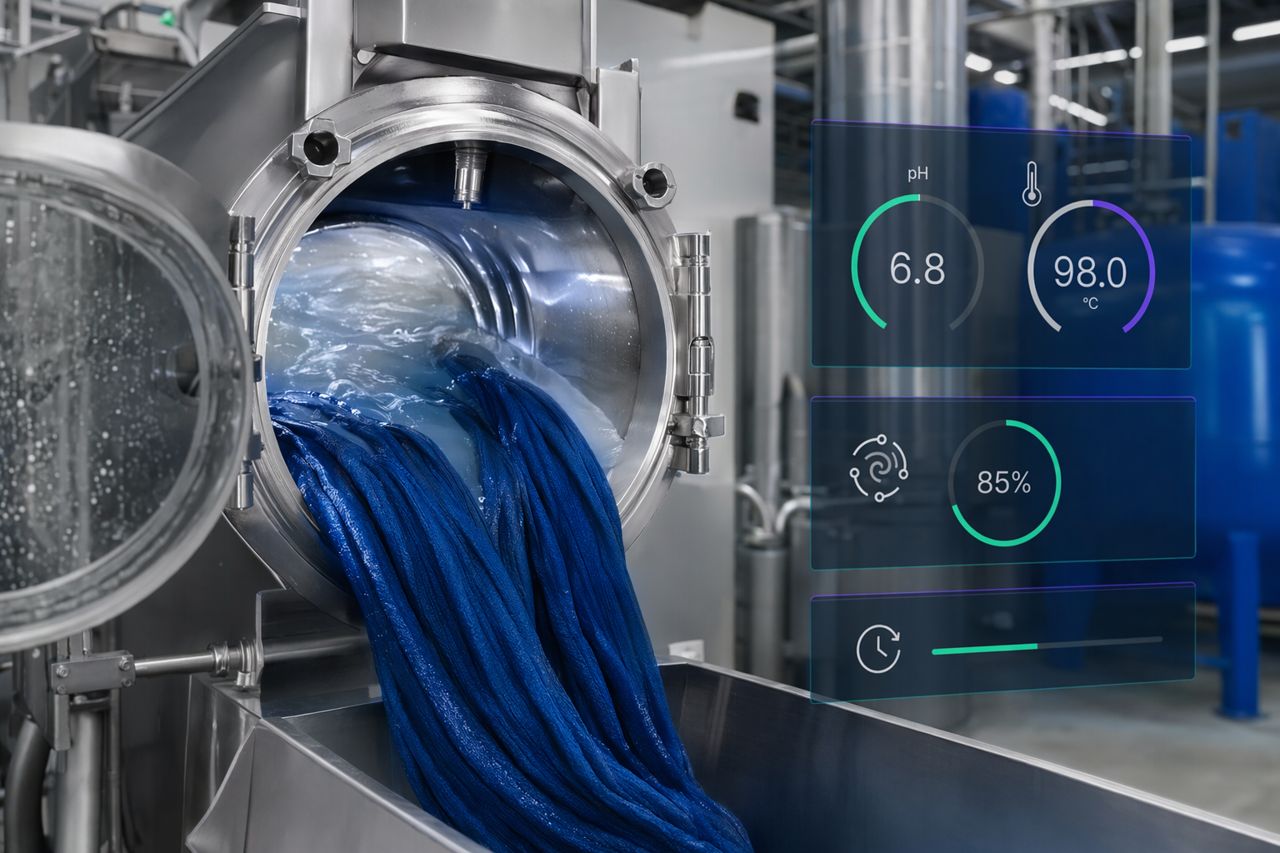
The SOP should define the operating window for pH, temperature, ramp behavior, and hold time. These controls should match the enzyme system, machine type, cotton construction, and downstream dye route.
Avoid treating bioscouring as a fixed-time ritual. The hold should be linked to absorbency performance and fabric condition, not just habit.
Control points should include:
- Target pH window
- Temperature setpoint and allowable drift
- Ramp profile if heating is required
- Process hold start definition
- Corrective action if pH or temperature leaves the window
6. Low-foam behavior
Foam is not cosmetic in a knit dyehouse. It can interfere with rope movement, reduce liquor contact, and create uneven preparation. The SOP should define what acceptable foam looks like on the machine sight glass or inspection point.
If the bioscouring package is intended for low-foam operation, the floor team should know when foam is normal, when it is a warning, and when the lot needs intervention.
Include:
- Normal foam appearance during circulation
- Excess foam trigger
- Approved defoaming response, if used
- Note on whether foam coincides with circulation instability
7. Absorbency endpoint
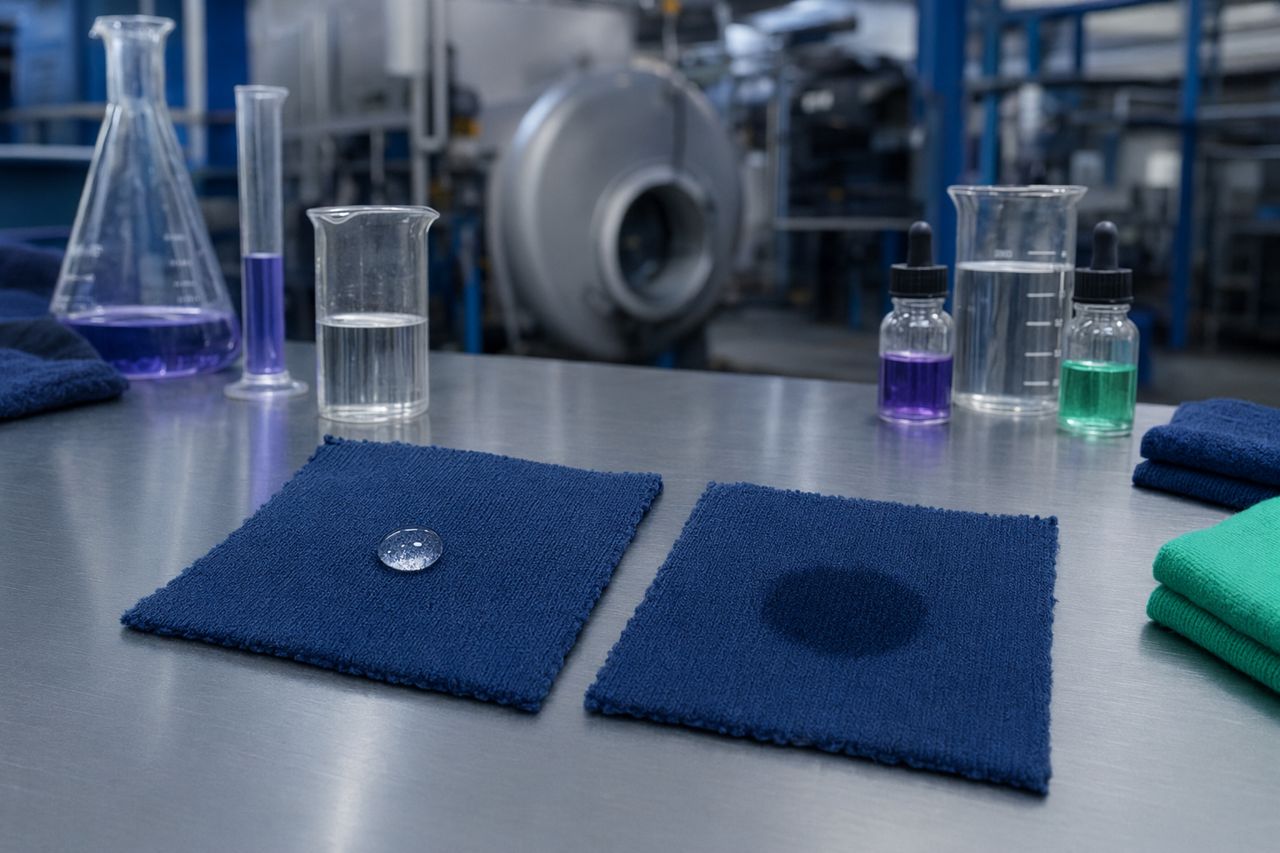
The endpoint must be simple enough for routine use and strong enough to protect dyeing. A droplet wetting check, wicking observation, or site-approved absorbency test can work if it is performed consistently and linked to acceptance criteria.
The SOP should define:
- Where the fabric sample is taken from
- When the sample is taken
- How the absorbency check is performed under the site method
- What pass, borderline, and fail look like
- What action is taken before releasing to dyeing
This is where a bioscouring SOP becomes commercially useful. A passed absorbency check reduces the chance of uneven dye strike, pale areas, specks, and shade correction work.
8. Rinse, neutralization, and transition to dyeing
Even a good bioscouring step can create trouble if the transition is uncontrolled. The SOP should define the rinse target, bath drop or overflow approach, neutralization requirement where applicable, and compatibility with the next dye recipe.
For mills running reactive dyeing on cotton knits, this section protects shade consistency and first-time-right performance.
Define:
- Rinse sequence
- Bath clarity or conductivity target according to the site standard
- pH condition before dyeing
- Whether the same bath route is allowed
- Hold time limits before dyeing begins
9. Recipe compatibility sign-off
Bioscouring chemistry should sit comfortably with the mill’s real recipe system. The SOP should list compatible auxiliary categories and any known restrictions for wetting agents, sequestrants, lubricants, peroxide residues, caustic carryover, or dyeing auxiliaries.
This is a critical point when evaluating an enzyme supplier for cotton bioscouring. The supplier should help define the compatibility window, not leave the dyehouse to discover conflicts during bulk production.
10. Quality feedback and corrective action
An SOP is only complete if it connects bioscouring results to downstream quality. The dyehouse should record whether each scoured lot leads to stable dyeing, acceptable shade matching, and reduced rework.
Track:
- Absorbency pass rate
- First bulk shade approval rate
- Number of shade corrections after bioscouring
- Reprocess or re-scour events
- Operator notes on foam, circulation, and fabric handling
Over time, this data shows whether the SOP is protecting output or simply documenting activity.
A practical bioscouring SOP template structure
Use this structure as a control checklist when reviewing or building your internal SOP:
- Scope — cotton knit fabric types, machines, and dye routes covered
- Responsibility — operator, lab, supervisor, and technical manager roles
- Fabric entry checks — construction, lot history, oil risk, storage condition
- Machine preparation — cleanliness, loading, liquor level, circulation
- Water and bath checks — water quality status, starting pH, auxiliary readiness
- Recipe and sequence — approved chemical order, enzyme charging method, mixing confirmation
- Process window — pH, temperature, ramp, hold, and drift response
- Foam and circulation monitoring — acceptable condition and escalation point
- Absorbency endpoint — sampling point, site test, pass/fail criteria
- Rinse and transition — rinse route, pH condition, release to dyeing
- Quality feedback — shade, rework, absorbency history, corrective actions
- Change control — supplier change, dosage window change, machine change, fabric change
What to ask your enzyme supplier before writing the SOP
Before locking the procedure, ask for support on the parts that affect floor reliability:
- What pH and temperature window should we protect on our machines?
- How should the enzyme be added to avoid local concentration and uneven contact?
- Which auxiliaries in our current recipe are compatible?
- What signs indicate under-scouring before the lot reaches dyeing?
- How should absorbency results be interpreted against shade performance?
- What process changes require re-validation?
- Can the supplier help compare trial, pilot, and bulk results using the same control points?
The answer should be operational, not generic. Cotton knit dyehouses need process confidence, not a chemistry brochure.
When the SOP is working
A controlled bioscouring SOP should show up in the dyehouse as:
- Faster and more even wetting before dyeing
- Cleaner transition from preparation to dye bath
- Fewer shade corrections linked to uneven absorbency
- Better repeatability between lab, pilot, and bulk lots
- Lower rework pressure on supervisors and machines
- More confidence when changing cotton construction or dye route
The goal is not to make bioscouring complicated. The goal is to make the critical variables visible, repeatable, and commercially useful.
Build the SOP around your actual dyehouse
Enzymesflow supports cotton knit dyehouses with enzyme selection and bioscouring process guidance built around machine reality, recipe compatibility, absorbency targets, and shade consistency.
If you are reviewing a bioscouring SOP, changing supplier, or trying to reduce rework from uneven preparation, send your machine type, fabric range, and current process route through the on-site form.
Request a quote and technical review using the form below.