Lipase support when cotton knits arrive with oil-heavy risk
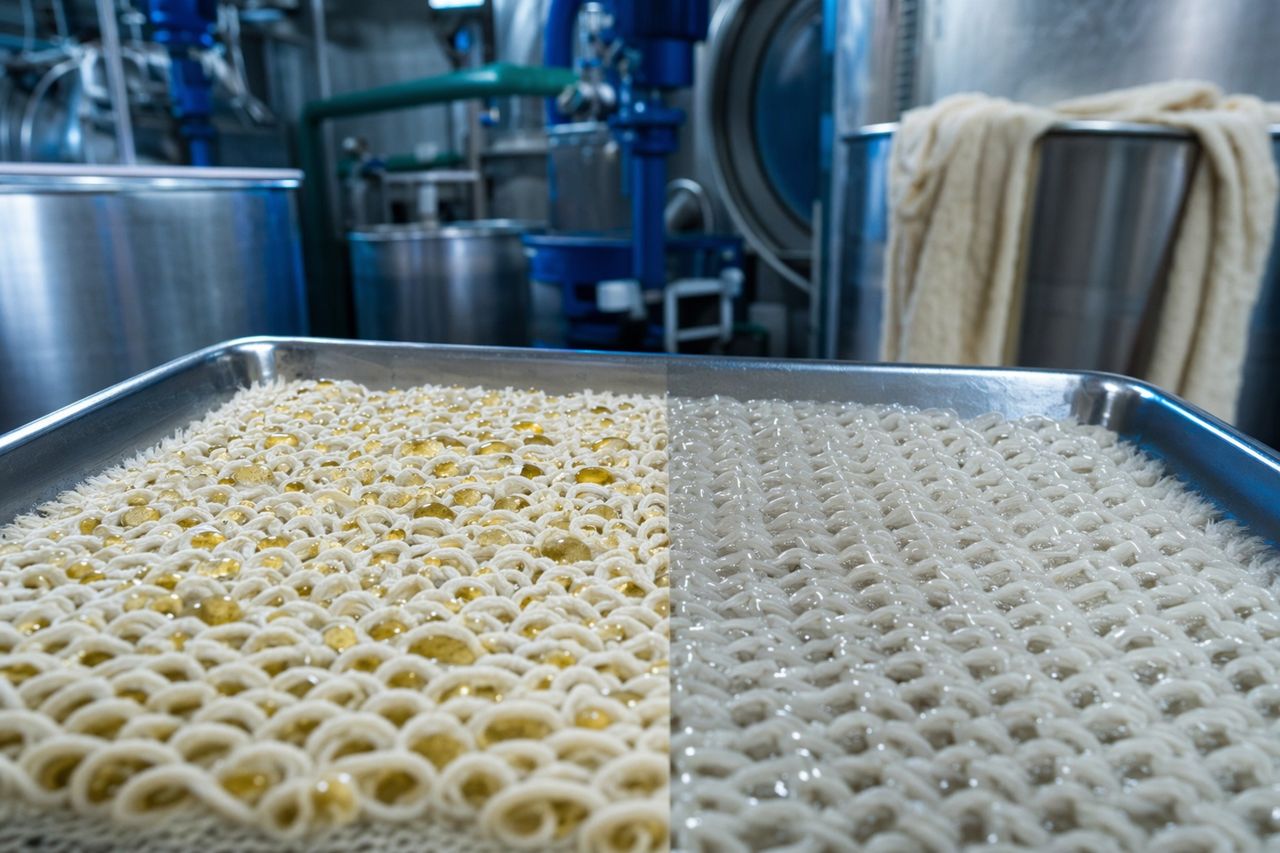
Some cotton knit lots enter pretreatment with more than natural wax to manage. Knitting oils, lubricants, emulsifier imbalance, and hydrophobic residues can slow wetting, create patchy absorbency, and make the dye bath less predictable.
Enzymesflow supports cotton knit dyehouses, and the textile auxiliary distributors and compounders who supply them, with practical guidance for difficult oily loads. On this page, the focus is lipase as a support enzyme: not a generic fix, but a targeted pretreatment tool for loads where oil interference is part of the problem.
For dyehouses, textile auxiliary distributors and compounders. Request a quote with the product or process problem, the quantity per month or per order, and the destination country. Pack format, price and lead time are quoted per order.
Where lipase fits in a knit dyehouse
Lipase can help break down oil-based residues that resist standard wetting and scouring chemistry. In cotton knit pretreatment, it is most useful when the mill sees:
- Slow or uneven wet-out in rope dyeing or soft-flow equipment
- Hydrophobic patches after scouring
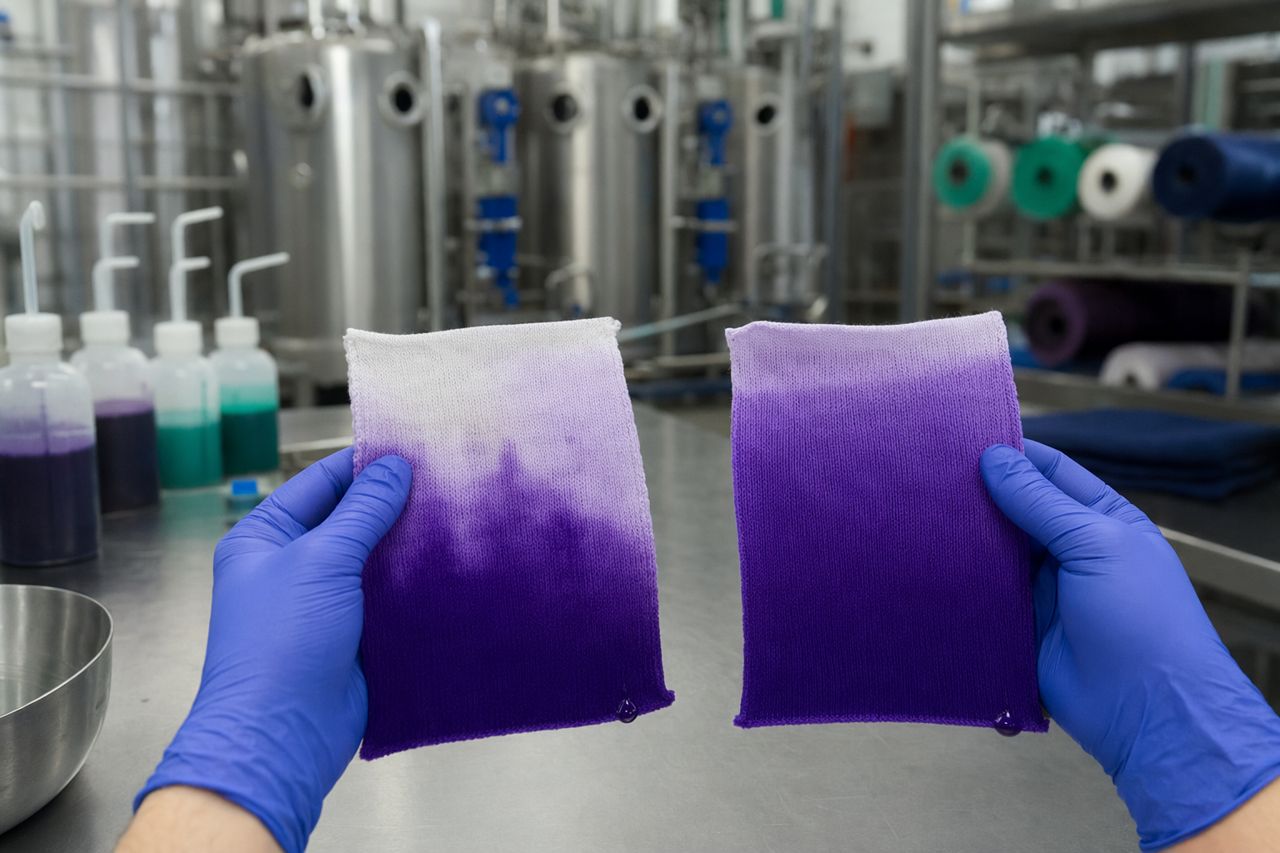
- Shade variation linked to inconsistent absorbency
- Higher rework risk on medium and deep shades
- Oily handle or surface residues before dyeing
- Variable incoming greige quality between suppliers or lots
The aim is simple: improve the starting condition of the fabric before dyeing, so the dye recipe has a more consistent substrate to work on.
What lipase changes in the pretreatment conversation
For cotton bioscouring, the usual focus is pectin, wax, and absorbency. Oil-heavy loads add another layer. If lubricants or oily residues remain on the knit structure, they can interfere with wetting, surfactant performance, and liquor movement through the fabric rope.
A lipase-supported pretreatment approach can help the dyehouse move from reactive troubleshooting to controlled load preparation.
Practical buyer value
For technical managers, the value is not enzyme theory. It is process confidence:
- More even wetting before dye addition
- Improved absorbency response across the fabric width and rope
- Lower risk of hydrophobic streaks and patchy dye uptake
- Better compatibility with shade-sensitive production planning
- Reduced avoidable rework caused by pretreatment inconsistency
- A clearer route for handling greige lots with high oil variation
Enzymesflow works with the reality of knit dyehouses: existing machines, established recipes, liquor-flow limitations, and production windows that cannot be treated like laboratory conditions.
Not every oily load needs the same answer
Lipase selection should match the residue profile and the pretreatment sequence. A compact single-bath process, a combined enzymatic scour, and a separate oil-management step may each require a different approach.
Key review points include:
- Greige source and known knitting lubricant type
- Existing wetting agent and scouring package
- pH and temperature window of the pretreatment stage
- Peroxide sequence and peroxide carryover risk
- Required whiteness or dye shade family
- Machine type, fabric rope density, and liquor exchange
- Rinse efficiency before dyeing
This is why Enzymesflow positions lipase as a support component, not a one-size-fits-all replacement for the full pretreatment system.
Recipe compatibility without unnecessary disruption
Most dyehouses do not want a pretreatment recommendation that forces a complete recipe rebuild. Enzymesflow evaluates lipase support around the mill’s current operating logic first.
That means looking at where the enzyme can be placed with the least disruption while still improving the load condition. In some cases, lipase support may sit before the main bioscouring stage. In other cases, it may be evaluated within a compatible pretreatment bath, depending on the surfactant package and operating window.
The goal is a cleaner, more absorbent cotton knit surface before dyeing, while protecting:
- Shade repeatability
- Fabric handle
- Process timing
- Chemical compatibility
- Rinse and neutralization discipline
- Batch-to-batch control
Trial signals that matter on the plant floor
A useful lipase trial should be judged by production-relevant indicators, not just by whether an enzyme was added to the recipe.
Enzymesflow typically helps mills compare:
- Wet-out speed and uniformity
- Droplet absorption behavior before dyeing
- Residual oily feel or surface resistance
- Dyeing levelness on sensitive shades
- Rework frequency on previously difficult lots
- Compatibility with existing pretreatment auxiliaries
- Operator observations during circulation, rinsing, and dyeing
When these signals improve together, the dyehouse gains a more reliable pretreatment foundation.
Common use cases
Oil-heavy greige cotton jersey
Single jersey and rib fabrics can arrive with visible or hidden lubricant variation. Lipase support can help reduce the risk of oily interference before dyeing, especially when the lot history is inconsistent.
Dark shade production with absorbency risk
Deep shades expose pretreatment weaknesses quickly. If oily residues cause uneven wetting, the problem may appear later as tone variation, barre emphasis, or rework demand.
Mills moving toward milder bioscouring programs
When a dyehouse is reducing aggressive scouring conditions, residue management becomes more important. Lipase support can be part of a controlled approach to absorbency without over-processing the knit.
Recurrent hydrophobic spots after standard scouring
If standard wetting and scouring chemistry does not fully resolve hydrophobic patches, lipase can be assessed as a targeted support tool alongside surfactant and rinse review.
How Enzymesflow supports evaluation
Enzymesflow helps technical teams assess whether lipase belongs in the pretreatment recipe and where it should be placed. The support is built for dyehouse decision-making:
- Review the current pretreatment route and pain points.
- Identify oil-related risk signals in the greige fabric and process history.
- Recommend a practical lipase evaluation plan compatible with the mill’s equipment.
- Define plant-floor comparison points before production trials begin.
- Help refine placement, timing, and auxiliary compatibility after trial feedback.
This approach gives buyers a clearer basis for quoting, sampling, and scale-up decisions.
When lipase is not the first lever
Lipase is not a cure for every pretreatment defect. If the root cause is poor liquor circulation, inadequate rinsing, wrong surfactant selection, excessive fabric loading, or uncontrolled peroxide carryover, those issues need to be addressed directly.
Enzymesflow’s role is to help separate enzyme opportunity from process noise. That protects the dyehouse from over-adjusting recipes when the main issue is mechanical or procedural.
Request a quote for lipase support
If your cotton knit dyehouse is managing oily greige loads, uneven wetting, or shade consistency risk, Enzymesflow can help you evaluate lipase support within your existing pretreatment route.
Request a quote and include the product or issue you want to solve, the quantity per month or per order, the destination country, your fabric type, machine type and current pretreatment sequence. Pack format, price and lead time are quoted per order.