Enzyme Supplier for Cotton Bioscouring in Knit Dyehouses
Cotton knit dyehouses do not buy bioscouring because it sounds cleaner on paper. They buy it when it helps the next bath run with more confidence.
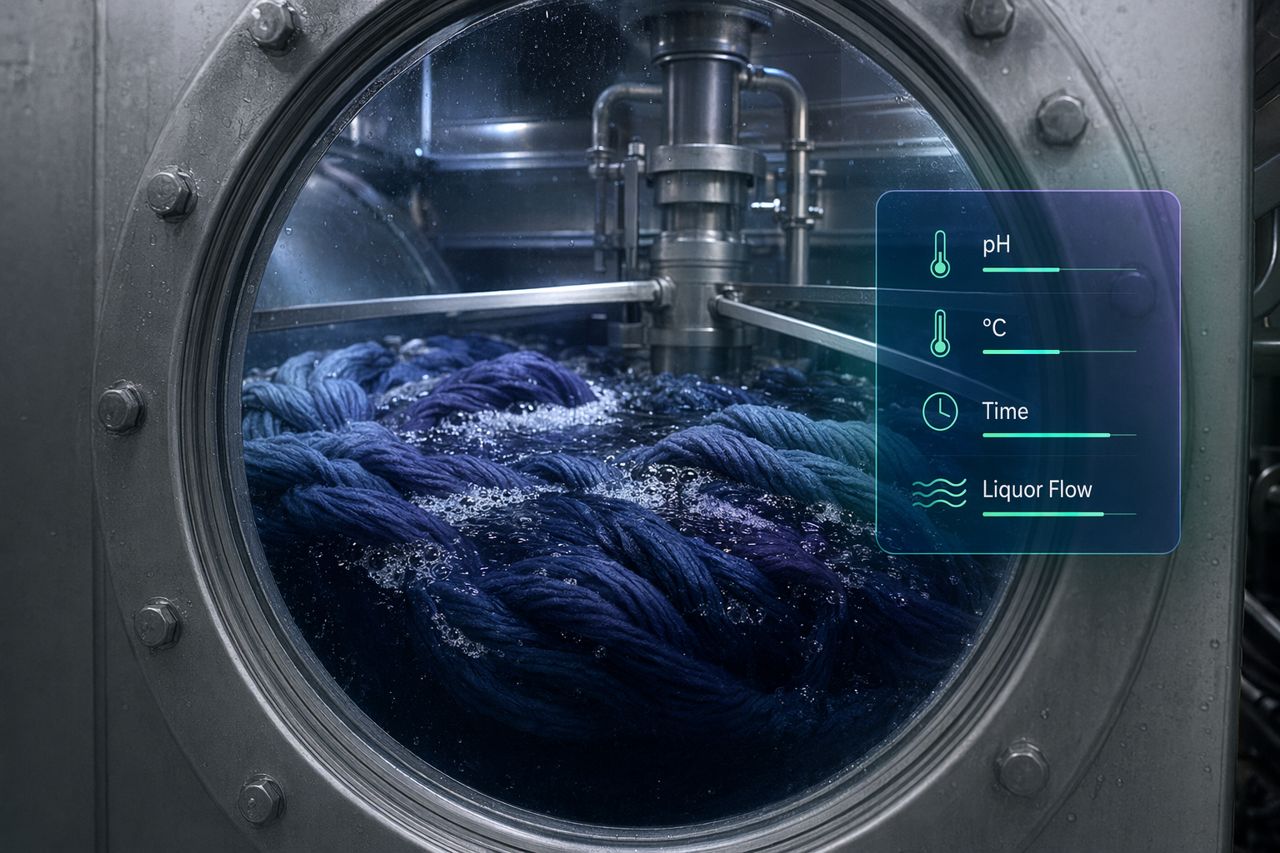
Enzymesflow supplies enzyme systems for cotton bioscouring built around dyehouse realities: rope circulation, liquor movement, wet-out checks, pH and temperature control, recipe compatibility, shade repeatability, and the commercial need to reduce absorbency-related rework.
Enzymesflow supports dyehouses, and the distributors and formulators who supply them, with practical pretreatment decisions for cotton knit fabric before reactive, direct, pigment, or other downstream coloration routes.
For dyehouses, textile auxiliary distributors and compounders. Request a quote with the product or process problem, the quantity per month or per order, and the destination country. Pack format, price and lead time are quoted per order.
Bioscouring that fits the knit dyehouse sequence
Cotton arrives with pectins, waxes, seed-coat fragments, natural fats, spinning auxiliaries, knitting oils, and handling residues. Conventional alkaline scouring can remove these barriers, but it can also create a heavier chemical load and a wider risk window for fabric harshness, strength loss, or inconsistent preparation.
Enzymesflow bioscouring is designed as a controlled enzyme-led approach to improve water penetration and dye readiness while supporting a lower-pressure pretreatment step.
The core position is simple:
- Pectinase-led scouring to help open the pectin structure that binds waxy impurities to cotton
- Optional lipase support where oils, greases, or waxy contamination require additional help
- Careful cellulase consideration where the mill sequence also requires surface preparation, defuzzing support, or improved handle control
The goal is not to force a generic enzyme into every recipe. The goal is to select the right pretreatment route for the fabric, machine, shade family, and finish requirement.
What dyehouse technical managers usually need from bioscouring
A bioscouring purchase should translate into operational control. Enzymesflow works with mills that want the enzyme step to support measurable process outcomes such as:
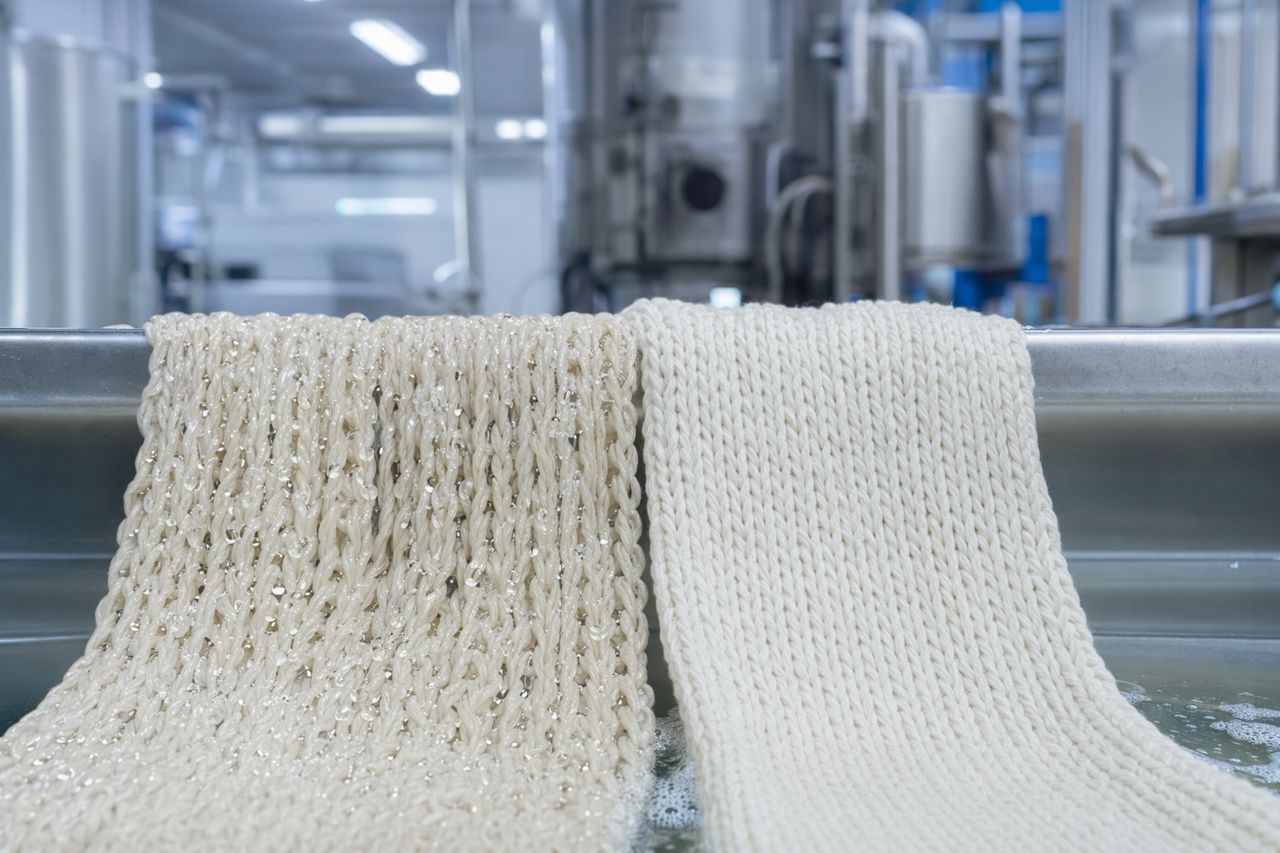
- Faster and more even fabric wetting after pretreatment
- More uniform absorbency across rope, batch, and fabric width
- Improved readiness for consistent dye uptake
- Lower risk of shade variation linked to poor preparation
- Reduced rewash or correction work caused by uneven scouring
- Better compatibility with existing dyehouse machines and recipe logic
- A more controlled pretreatment profile than aggressive alkaline-only scouring
- Cleaner decision-making between pectinase, lipase, and cellulase options
These are plant-floor KPIs, not academic talking points.
Where pectinase does the main work
In cotton bioscouring, pectinase is often the lead enzyme because pectin acts like a structural anchor for other hydrophobic impurities on the cotton surface. When that network is opened, waxes and associated materials become easier to remove or disperse under controlled dyehouse conditions.
For knit dyehouses, this matters because cotton rope must absorb liquor evenly while circulating. Uneven wetting in the preparation stage can show up later as patchy dyeing, poor shade build, repeated lab-to-bulk adjustments, or preventable customer claims.
Enzymesflow pectinase-led bioscouring systems are selected around:
- Cotton knit construction and fabric weight
- Degree of waxiness or poor initial absorbency
- Machine type and liquor movement
- Target pH and temperature window
- Compatibility with wetting agents, dispersants, sequestering agents, and peroxide residues if present
- Downstream dye class and shade sensitivity
- Required hand feel, absorbency, and surface appearance
When lipase support makes commercial sense
Not every cotton knit lot needs the same enzyme package. Some greige fabric carries more knitting oil, lubricant, waxy contamination, or finishing history than expected. In those cases, a pectinase-only route may improve wetting but still leave an oily barrier that affects liquor contact.
Enzymesflow can recommend lipase-supported bioscouring where the issue is not just cotton pectin, but oil and grease interference.
Typical triggers include:
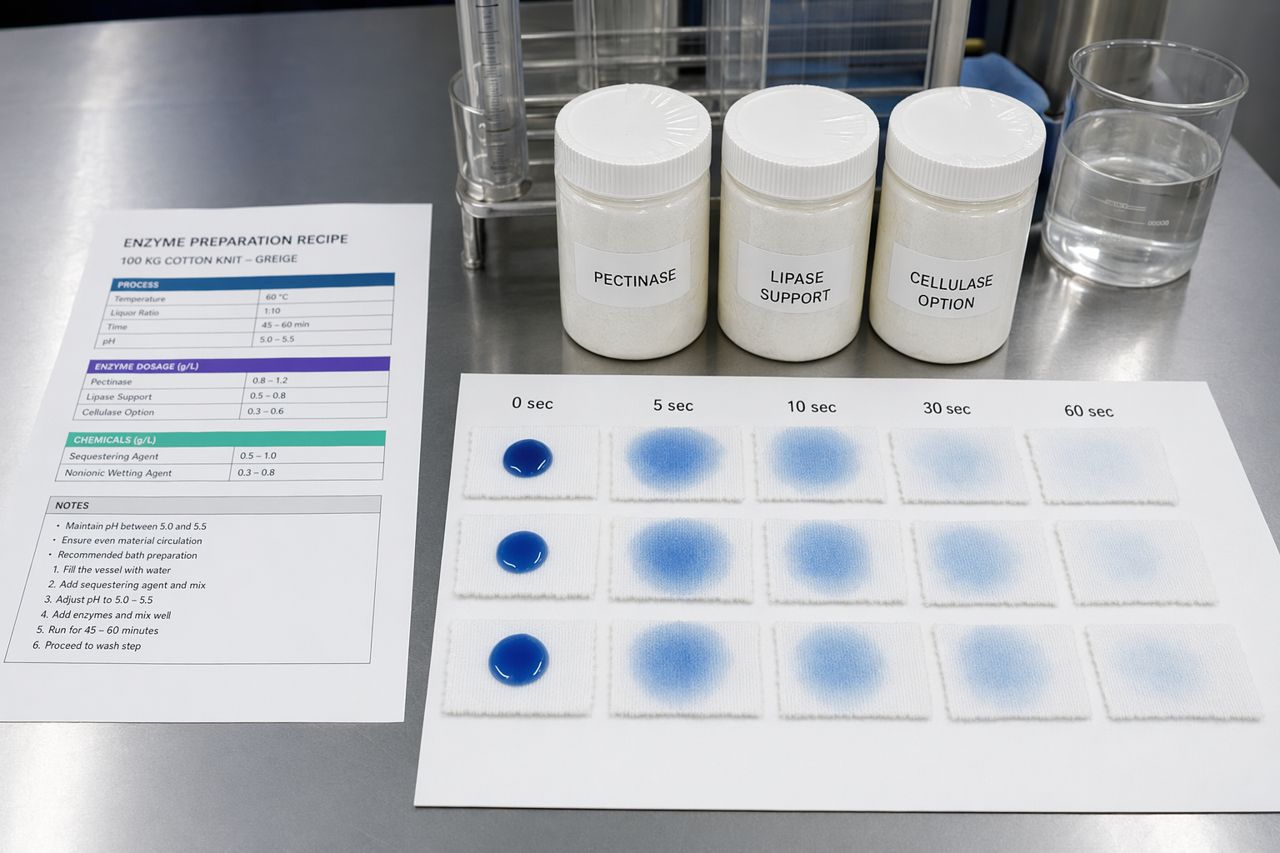
- Slow or uneven droplet absorption after standard pretreatment
- Fabric that wets at the edges but resists penetration in the rope mass
- Variable absorbency between suppliers or greige lots
- Shade inconsistency that tracks back to preparation rather than dye selection
- Higher correction rates on medium and deep shades
Lipase is treated as a process tool, not a default addition. The recommendation depends on fabric history and mill objectives.
Where cellulase may belong in the sequence
Cellulase is not a scouring enzyme in the same way pectinase is. However, some cotton knit dyehouse sequences require surface preparation alongside bioscouring, especially where fabric appearance, loose fiber management, handle, or pilling tendency is part of the final quality target.
Enzymesflow can help decide whether cellulase belongs:
- Before dyeing
- After dyeing
- As a separate biopolishing step
- Not at all for the specific fabric and shade route
This distinction is important. Over-treating cotton surface can create strength, weight-loss, or shade-depth concerns. Enzymesflow supports controlled selection so the enzyme choice follows the mill objective.
Recipe compatibility before purchase
A useful enzyme supplier for cotton bioscouring should ask more than “what dosage do you use?” Enzymesflow reviews the conditions that determine whether the pretreatment will behave consistently in production.
Before quoting, we typically review:
- Fabric type: single jersey, rib, interlock, fleece, terry, compact yarn, open-end yarn, or blends with cotton dominance
- Greige condition: waxiness, oil loading, storage age, supplier variation, and prior wet processing
- Machine route: jet, soft-flow, overflow, winch, or continuous-compatible preparation
- Process window: target pH, temperature profile, hold time, liquor ratio, and bath circulation behavior
- Chemical partners: wetting agent, dispersant, chelator, buffer, peroxide killer, salt, alkali, and residual peroxide risk
- Quality targets: absorbency time, shade consistency, whiteness requirement, hand feel, dimensional behavior, and rework reduction
- Downstream route: bleaching, dyeing, printing, garment processing, or finishing
The result is a quote based on use conditions, not a generic product list.
Buying criteria that protect shade consistency
1. Recipe compatibility
A bioscouring enzyme should fit the existing preparation logic. It must be evaluated against actual auxiliaries, not only clean lab water. Compatibility with wetting agents, sequestrants, dispersants, pH buffers, peroxide routes, and antifoams matters because enzyme performance can be weakened by the surrounding bath.
2. Controlled wetting improvement
The practical indicator is whether the fabric wets uniformly and reliably before dyeing. Mills commonly monitor absorbency, drop penetration, wicking behavior, liquor pick-up, and fabric appearance after preparation. Enzymesflow helps align enzyme selection with the plant’s preferred quality checks without requiring confidential analytical methods.
3. Low foam and machine stability
Foam control is critical in jet and overflow systems. Excess foam can disrupt circulation, reduce bath contact, create pump issues, and complicate levelness. A bioscouring enzyme should be chosen with machine dynamics in mind, not just chemistry.
4. Lot-to-lot consistency
Bulk buying should reduce procurement friction, not introduce process variation. Ask about batch traceability, documentation, storage expectations, shelf-life planning, and change control. A reliable supplier should support repeat production, not only the first trial.
5. Fabric hand and strength preservation
Cotton knit buyers are often trying to improve preparation while avoiding unnecessary harshness. A well-selected bioscouring route can support cleaner wet-out while helping maintain fabric hand, dimensional behavior, and a controlled surface feel.
Catalase and downstream preparation support
Catalase is not the bioscouring enzyme itself, but it can be relevant in cotton preparation when peroxide removal is needed before dyeing. If your mill combines scouring and bleaching or moves quickly from peroxide bleach to reactive dyeing, catalase support can help reduce peroxide-related shade risk before the dye bath.
This is a separate process role and should be selected as such.
Common mistakes when sourcing bioscouring enzymes
Buying by enzyme name only
“Pectinase” is not a full specification. Two products with the same broad enzyme family can behave differently in a dyehouse bath. Specify the process window, machine type, fabric, and target preparation result.
Ignoring auxiliary compatibility
If the enzyme is evaluated without the same wetting agent, chelant, buffer, or process water used in production, the trial may not predict plant performance.
Treating bioscouring as a universal drop-in
Some mills can replace part of a conventional scouring load. Others need a hybrid route. Others use bioscouring selectively for sensitive knits, absorbency-critical lots, or sustainability-driven product lines. The right answer depends on the mill’s constraints.
Underestimating storage and handling
Bulk enzymes should be protected from avoidable heat, contamination, and poor stock rotation. Handling discipline helps preserve predictable performance between deliveries.
Practical benefits in production language
Enzymesflow bioscouring programs are designed to help mills move from “fabric appears scoured” to “fabric is predictably dye-ready.”
Better absorbency control
Uniform wetting supports more even liquor access in the dye bath. This is especially important for tubular knits, dense constructions, and fabric ropes that tend to trap air or resist penetration.
Shade consistency support
Preparation inconsistency is one of the quiet causes of shade drift. By improving the fabric’s ability to accept liquor evenly, bioscouring can reduce one variable before dyeing begins.
Reduced correction pressure
When pretreatment is under-controlled, dyehouses often pay later through rework, added sampling, stripping risk, or longer machine occupation. A stable bioscouring route helps reduce avoidable correction work.
Lower reliance on severe alkaline scouring
Enzyme-led preparation can reduce the need to push harsh scouring conditions where the fabric, hand feel, or energy profile makes that undesirable. The exact balance depends on mill targets and fabric quality.
Better fit for modern buyer audits
Brands and garment buyers increasingly ask for process justification, chemical control, and repeatability. Bioscouring can be part of a cleaner pretreatment strategy when properly validated in the mill.
How Enzymesflow supports trials
Enzymesflow trial support is structured for dyehouse decision-making.
- Process review — We collect fabric, machine, chemical, and quality target information.
- Enzyme route selection — We determine whether the route should be pectinase-led only, lipase-supported, or paired with a separate cellulase step.
- Compatibility check — We flag likely conflicts with pH, temperature, peroxide carryover, auxiliaries, or downstream dye chemistry.
- Trial recipe guidance — We provide a practical starting recipe for mill validation.
- Production observation — We help review wet-out, absorbency, shade behavior, bath clarity, hand feel, and rework indicators.
- Quote alignment — We quote based on the validated route and expected production use.
Common use cases
Enzymesflow cotton bioscouring support is suitable for mills working with:
- Cotton single jersey for reactive dyeing
- Cotton rib and interlock requiring even absorbency
- Cotton fleece and terry with slower liquor penetration
- Pre-bleach preparation where scouring consistency affects whiteness and dyeability
- Medium and deep shades where preparation variation becomes visible
- Garment programs requiring softer hand and controlled surface condition
- Dyehouses reducing aggressive alkaline scouring where the fabric allows it
What we need to prepare a quote
To recommend and quote the correct enzyme route, please share:
- Product or process problem: bioscouring, lipase support, cellulase step, or the defect you want to solve
- Quantity: monthly or batch-level production estimate, or trial quantity
- Destination: delivery country or region
- Fabric construction and GSM range
- Greige supplier or variation pattern, if known
- Current pretreatment recipe and machine type
- Target pH, temperature, and process time
- Main wetting or absorbency problem
- Shade range and dye class
- Rework, rejection, or correction issues linked to preparation
- Whether oil, wax, or surface fuzz is part of the problem
- Storage and dosing setup for bulk enzyme handling
- Whether you buy for your own dyehouse or supply dyehouses as a distributor or compounder
Request a quote
Dyehouses, textile auxiliary distributors and formulators can send their process details through the on-site quote form. Wholesale and bulk supply is quoted per order: pack format, price and lead time depend on product, quantity and destination.
Enzymesflow will review your fabric route, recommend the right pectinase-led bioscouring approach, identify whether lipase or cellulase support is justified, and prepare a practical quote for production evaluation.