Cotton scouring enzyme for knitted cotton dyehouses
Cotton knit dyehouses do not buy scouring chemistry for theory. They buy it to make fabric wet evenly, dye predictably, and move through the line without avoidable rework.
Enzymesflow supplies pectinase-led cotton bioscouring inputs for knit pretreatment teams that need controlled wax and pectin removal before reactive dyeing, bleaching, or combined preparation routes. For dyehouse buyers and the distributors who supply them, this page explains where enzyme scouring fits, what to check on plant, and when it is commercially worth quoting.
For dyehouses, textile auxiliary distributors and compounders. Request a quote with the product or process problem, the quantity per month or per order, and the destination country. Pack format, price and lead time are quoted per order.
Request a quote using the on-site form
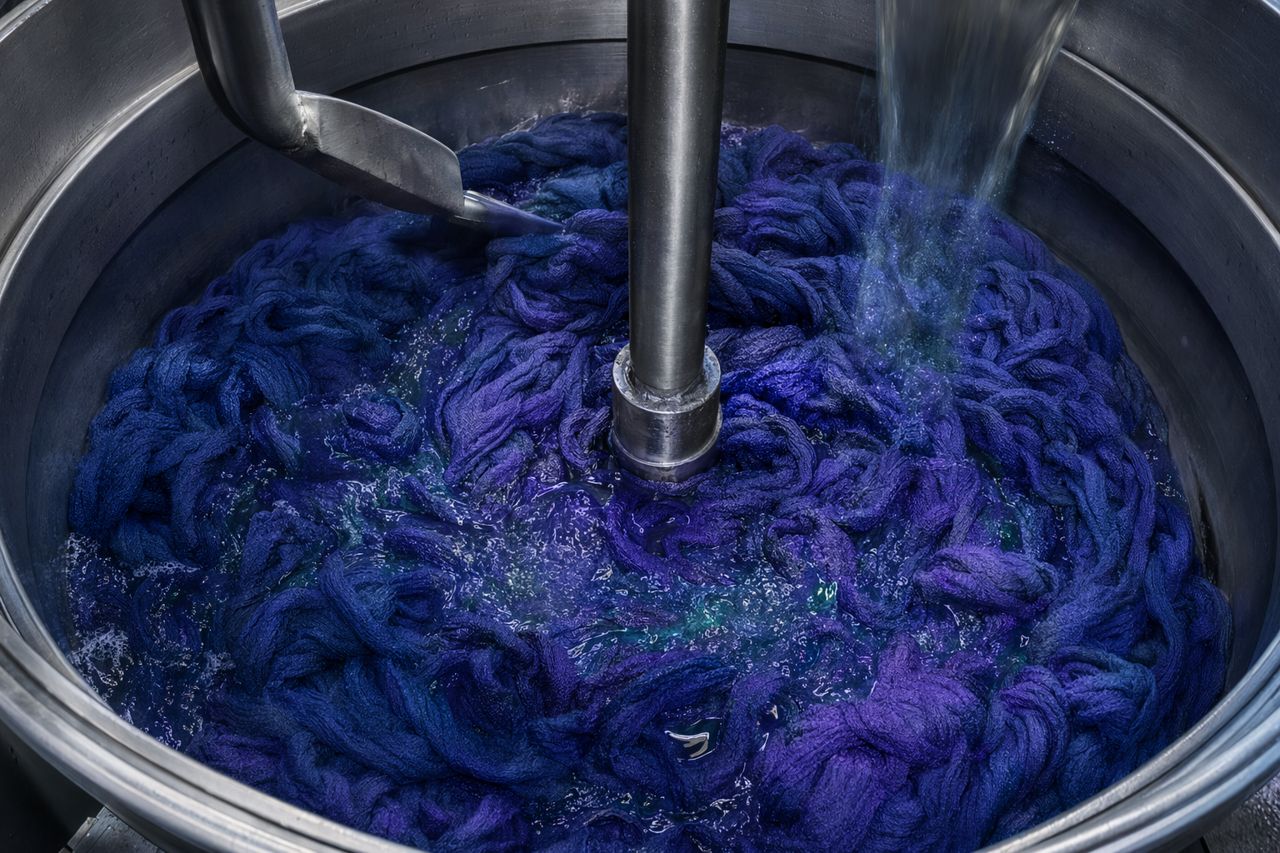
Where enzyme scouring fits in a cotton knit process
In a knitted cotton dyehouse, bioscouring is typically considered where the target is improved absorbency with a milder pretreatment profile than conventional strong alkaline scouring.
Common fit points include:
- Jet dyeing preparation of single jersey, rib, interlock, fleece, and similar cotton knits
- Pretreatment before reactive dyeing where wetting uniformity affects first-time-right shade
- Routes where hand feel, fabric weight control, and reduced harshness matter
- Mills reviewing caustic load, neutralization demand, or effluent pressure
- Programs aiming to reduce shade rework caused by uneven preparation
Enzymesflow is not positioned as a generic enzyme listing. We support cotton knit dyehouses that need recipe-compatible enzyme scouring guidance, trial structure, and purchasing confidence.
What the enzyme is doing
Raw cotton carries natural pectins, waxes, oils, seed-coat fragments, and handling contaminants. In knitted fabric, these barriers can create uneven wetting inside the fabric rope, especially when circulation, loading, or liquor movement is marginal.
A pectinase-led bioscouring step targets pectin structures that help bind hydrophobic surface materials to the fibre. As the surface opens, wetting and liquor penetration improve. The practical dyehouse objective is simple: a fabric rope that absorbs consistently before dye is committed.
The result should be visible in plant terms:
- Faster and more even wet-out
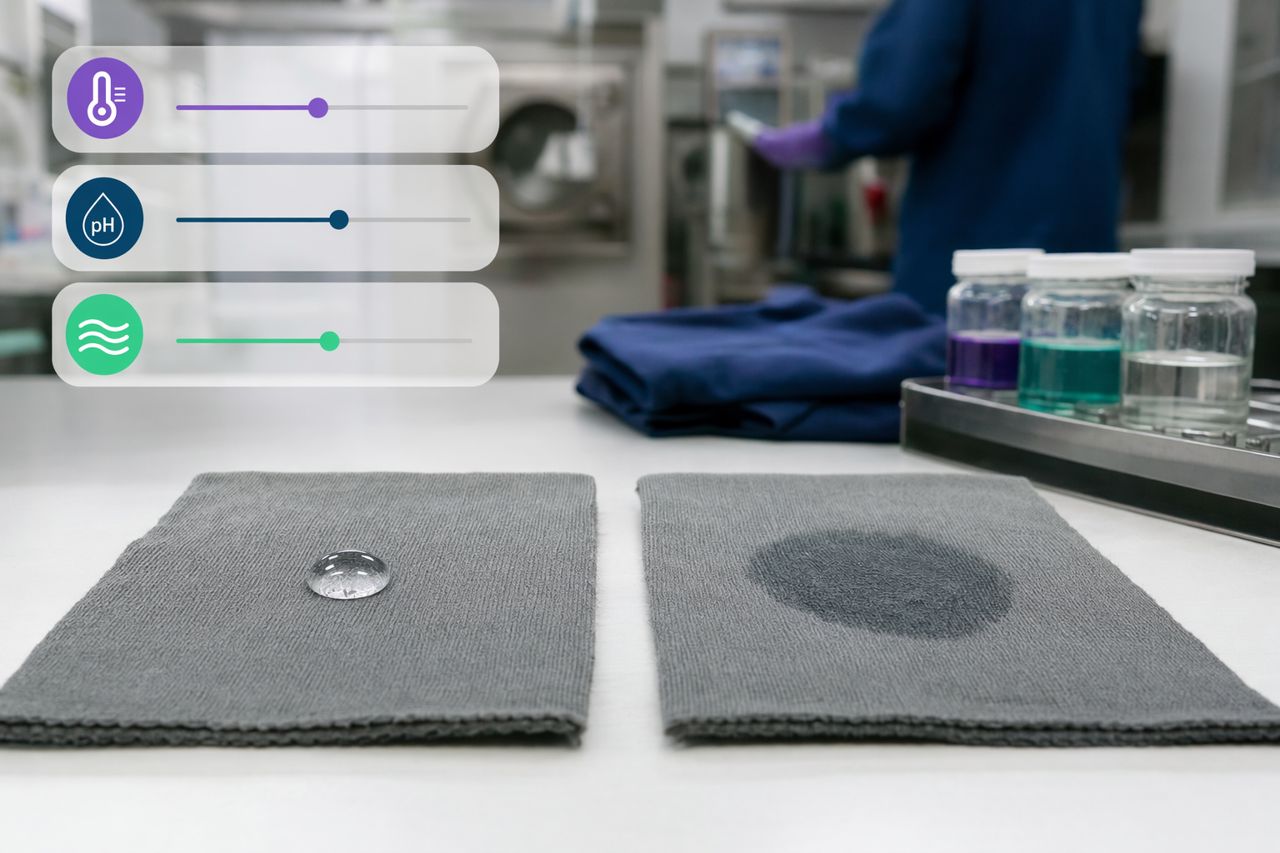
- More consistent droplet absorption across panels
- Better dye-liquor access inside loop structures
- Fewer preparation-related shade corrections
- More confidence when matching repeat shades
- Lower risk of harsh over-processing on sensitive knit constructions
Plant variables to check before moving to trial
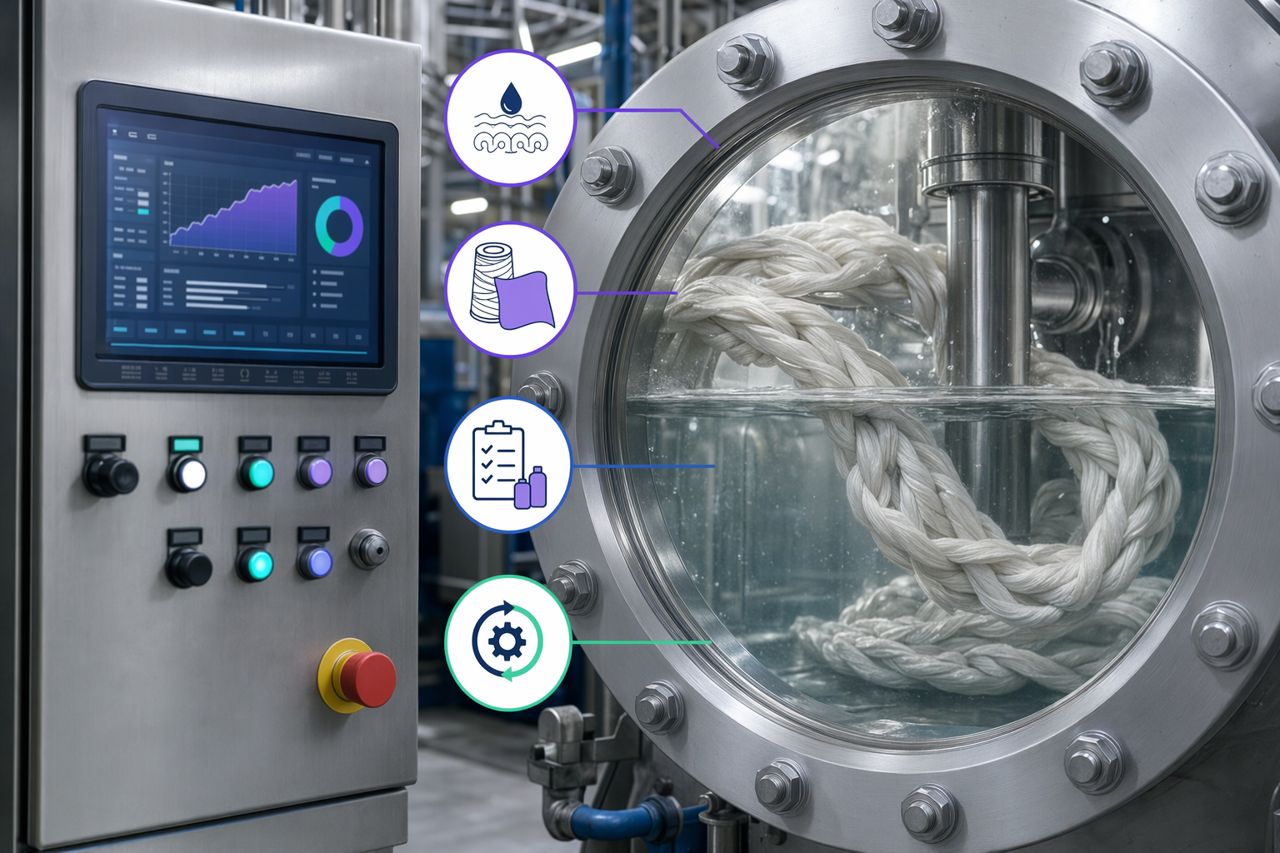
Bioscouring performance depends on the line, not just the product. Before quoting or trialing, Enzymesflow will usually ask for the variables that influence enzyme contact and fabric readiness.
Fabric and substrate
- Cotton type and blend status
- Knit construction and fabric weight range
- Grey fabric storage condition
- Level of knitting oil or wax burden
- Historical wetting or dyeing issues
Machine and liquor movement
- Jet or soft-flow machine type
- Rope circulation quality
- Loading practice
- Low-foam requirement
- Compatibility with wetting agents, sequestrants, and peroxide routes where relevant
Recipe conditions
- Target pH and temperature window
- Hold time available within the current production plan
- Rinse and neutralization sequence
- Whether scouring is separate, combined, or linked to bleaching
- Downstream reactive dyeing sensitivity
Quality checks
- Absorbency pass rate before dyeing
- Shade repeatability and first-time-right record
- Re-dye, strip, or correction frequency
- Hand feel and fabric strength observations
- Effluent and neutralization indicators tracked by the mill
When to use enzyme scouring instead of conventional scouring
Enzyme scouring is worth evaluating when preparation inconsistency is costing more than the chemistry line item.
It may be a good fit when you need:
- Dye-ready cotton knits with more uniform absorbency
- A milder pretreatment approach for selected styles
- Better process control in repeat shade programs
- Reduced dependence on aggressive alkaline scouring in suitable routes
- Lower rework exposure from uneven wetting
- A cleaner hand feel profile where fabric character matters
It may not be the first option when grey fabric contamination is extreme, when heavy removal of oils and waxes requires a stronger alkaline package, or when the machine cannot provide reliable fabric-liquor contact. Enzymesflow will say that clearly before a trial is framed.
Recipe compatibility matters
Dyehouses rarely have the freedom to rebuild a preparation line from zero. A workable bioscouring input must fit the mill’s operating window and downstream shade expectations.
Enzymesflow focuses on:
- Compatibility with existing pretreatment auxiliaries where appropriate
- Low-foam behavior for jet processing
- Stable handling in practical dyehouse conditions
- Clear addition sequence recommendations
- Trial plans that compare against the mill’s current standard
- Decision criteria based on absorbency, shade, hand feel, and rework risk
The goal is not to create a lab-perfect result that fails on bulk. The goal is to build a repeatable preparation route that technical managers and production teams can trust.
What a Enzymesflow trial should prove
A cotton bioscouring trial should be judged by dyehouse outcomes, not by brochure language.
Recommended trial comparisons include:
- Current standard scouring route versus Enzymesflow bioscouring route
- Absorbency checks across fabric width and rope sections
- Reactive dyeing on a shade sensitive enough to expose preparation defects
- Hand feel and appearance comparison after finishing
- Review of correction, leveling, or rework requirement
- Operator feedback on foam, handling, and machine cleanliness
- Cost-in-use review including time, auxiliary changes, rinsing, and rejected shade risk
A quote is most useful when these conditions are known. That lets Enzymesflow recommend the right bioscouring input and avoid over- or under-specifying the product.
Buyer value for dyehouse teams
For a cotton knit dyehouse, a good enzyme scouring supplier should help reduce uncertainty in bulk production.
Enzymesflow supports buyers with:
- A focused product direction for pectinase-led cotton bioscouring
- Practical fit guidance for jet-dyeing preparation lines
- Clear questions before quotation, so the offer matches plant reality
- Process notes built around absorbency and shade consistency
- Support for mills comparing bioscouring against current alkaline routes
- Commercially practical recommendations for repeat production
If your current pretreatment route is causing wetting variation, repeat shade drift, or unnecessary correction work, Enzymesflow can help you evaluate whether cotton scouring enzyme belongs in the recipe.
Request a quote
Wholesale and bulk supply is quoted per order. To receive a quotation, send through the on-site request form:
- Product or process problem: cotton scouring enzyme, or the absorbency or shade issue you want to solve
- Quantity: monthly production estimate, or trial quantity
- Destination: delivery country or region
- Fabric type, current pretreatment route and machine type
- Whether you buy for your own dyehouse or supply dyehouses as a distributor or compounder