Bulk enzyme for textile bioscouring, selected for knit dyehouse reality
Cotton knit preparation is judged at the dye machine, not on a brochure. If the fabric rope does not wet evenly, if residual waxes create patchy absorbency, or if the scouring step destabilizes the next recipe, the cost appears later as shade correction, reprocessing, delayed lots, and avoidable chemical load.
LoopBath supplies bulk enzyme solutions for cotton knit bioscouring with a practical focus: controlled wet-out, clean liquor behavior, compatibility with existing preparation sequences, and dependable lot-to-lot performance. For dyehouses searching for an enzyme supplier for cotton bioscouring, the buying question is not only “which enzyme?” It is “which process role, under which bath conditions, with what support at scale?”
Request a quote through the on-site form for bulk supply, sample evaluation, and process-fit discussion.
What textile bioscouring needs to accomplish
Cotton knit greige fabric carries natural impurities that interfere with preparation and dyeing:
- pectins and associated non-cellulosic material
- waxy surface components that slow wetting
- seed-coat and trash-related residues
- variable absorbency between lots, yarn sources, and fabric structures
- liquor penetration challenges in rope-processing machines
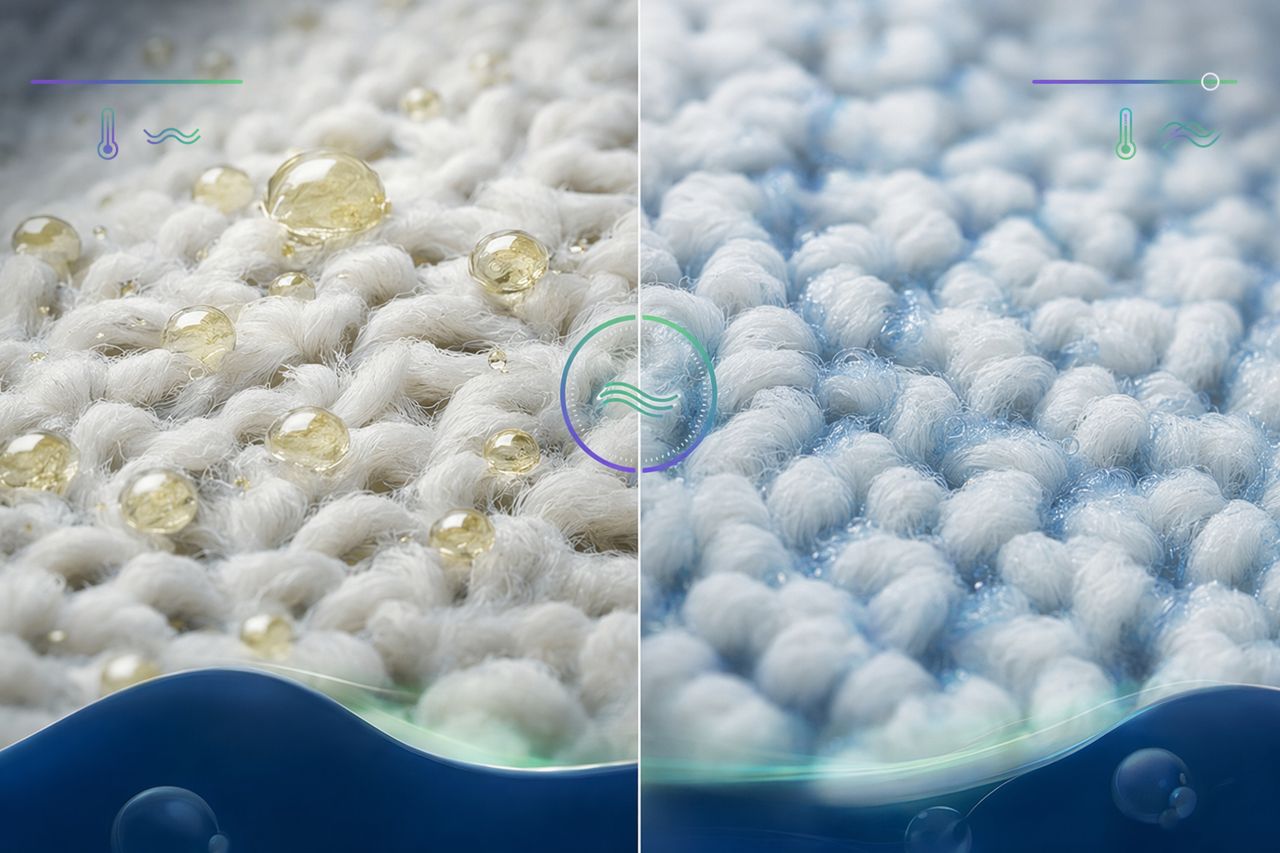
A bioscouring enzyme system is used to help open the cotton surface and improve hydrophilicity under milder preparation conditions than conventional high-alkali scouring alone. The target is not an academic enzyme result. The target is dyehouse utility: faster and more uniform wetting, stable preparation behavior, and fabric that enters dyeing with fewer surprises.
Which enzyme families matter in cotton bioscouring?
Pectinase-centered bioscouring systems
For cotton knit bioscouring, pectinase-centered systems are usually the core choice. They support removal or loosening of pectin-rich material that contributes to hydrophobicity and impurity retention on cotton fiber surfaces.
For bulk buying, the important selection factors are:
- effective performance within your bath pH and temperature window
- stability during hold time and circulation
- compatibility with wetting agents, dispersants, chelants, and salt carryover
- low-foam behavior in jet, overflow, and soft-flow dyeing machines
- consistent absorbency improvement across fabric styles
Enzyme-assisted scouring blends
Some dyehouses need a broader preparation profile than a single enzyme role can provide. Enzyme-assisted blends may be selected when cotton lots show heavier wax load, inconsistent greige quality, or higher absorbency variation.
The buying conversation should stay process-led:
- What impurity profile is causing the defect?
- Is the fabric being prepared for reactive dyeing, pale shades, deep shades, or combined bleach routes?
- Does the process need faster wet-out, lower caustic exposure, less weight loss, or better handle retention?
- Will the enzyme be used in a standalone bioscouring step or as part of an integrated preparation sequence?
LoopBath does not require buyers to publish private recipes or manufacturer assay details. We work from machine type, fabric construction, target outcome, and compatibility boundaries.
Catalase and downstream preparation support
Catalase is not the bioscouring enzyme itself, but it can be relevant in cotton preparation when peroxide removal is needed before dyeing. If your mill combines scouring and bleaching or moves quickly from peroxide bleach to reactive dyeing, catalase support can help reduce peroxide-related shade risk before the dye bath.
This is a separate process role and should be selected as such.
What a knit dyehouse should specify before buying bulk enzyme
A bulk enzyme purchase performs best when the supplier understands the plant conditions around the product. Before quoting, LoopBath typically asks for:
- cotton type: combed, carded, compact, organic, recycled blend, or mixed greige sources
- fabric form: single jersey, rib, interlock, fleece, pique, terry, or elastane-containing knit
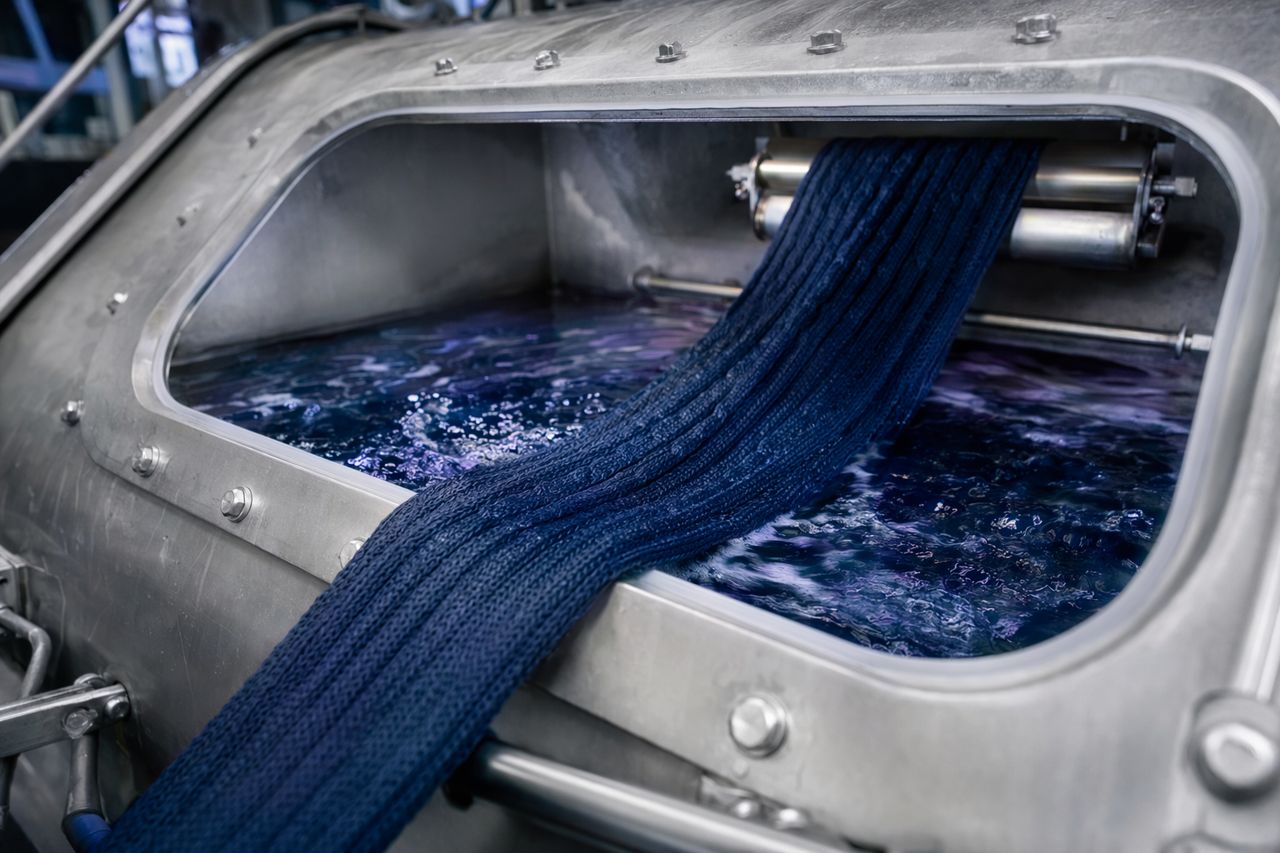
- machine type: jet, overflow, soft-flow, winch, or continuous preparation range
- liquor ratio and circulation behavior
- current scouring route and chemical stack
- target shade range and dye class
- absorbency requirement before dyeing or printing
- known rework causes: unlevelness, specks, poor wet-out, patchy shade, crease marking, or inconsistent handfeel
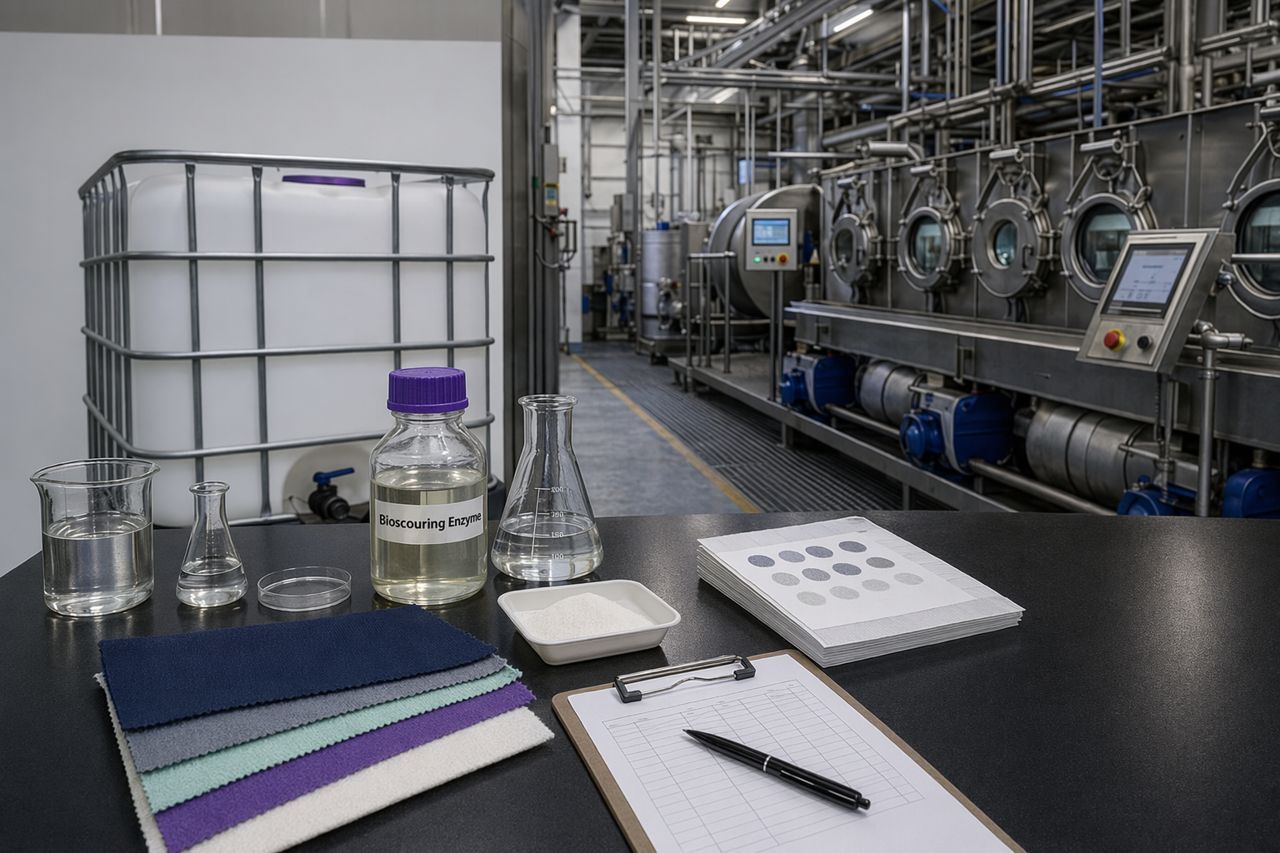
- storage and dosing setup for bulk enzyme handling
The more specific the process picture, the easier it is to quote the right enzyme system instead of overselling a generic product.
Buying criteria that protect shade consistency
1. Recipe compatibility
A bioscouring enzyme should fit the existing preparation logic. It must be evaluated against actual auxiliaries, not only clean lab water. Compatibility with wetting agents, sequestrants, dispersants, pH buffers, peroxide routes, and antifoams matters because enzyme performance can be weakened by the surrounding bath.
2. Controlled wetting improvement
The practical indicator is whether the fabric wets uniformly and reliably before dyeing. Mills commonly monitor absorbency, drop penetration, wicking behavior, liquor pick-up, and fabric appearance after preparation. LoopBath helps align enzyme selection with the plant’s preferred quality checks without requiring confidential analytical methods.
3. Low foam and machine stability
Foam control is critical in jet and overflow systems. Excess foam can disrupt circulation, reduce bath contact, create pump issues, and complicate levelness. Bulk enzyme for textile bioscouring should be chosen with machine dynamics in mind, not just chemistry.
4. Lot-to-lot consistency
Bulk buying should reduce procurement friction, not introduce process variation. Ask about batch traceability, documentation, storage expectations, shelf-life planning, and change control. A reliable supplier should support repeat production, not only the first trial.
5. Fabric hand and strength preservation
Cotton knit buyers are often trying to improve preparation while avoiding unnecessary harshness. A well-selected bioscouring route can support cleaner wet-out while helping maintain fabric hand, dimensional behavior, and a controlled surface feel.
Common mistakes when sourcing bioscouring enzymes
Buying by enzyme name only
“Pectinase” is not a full specification. Two products with the same broad enzyme family can behave differently in a dyehouse bath. Specify the process window, machine type, fabric, and target preparation result.
Ignoring auxiliary compatibility
If the enzyme is evaluated without the same wetting agent, chelant, buffer, or process water used in production, the trial may not predict plant performance.
Treating bioscouring as a universal drop-in
Some mills can replace part of a conventional scouring load. Others need a hybrid route. Others use bioscouring selectively for sensitive knits, absorbency-critical lots, or sustainability-driven product lines. The right answer depends on the mill’s constraints.
Underestimating storage and handling
Bulk enzymes should be protected from avoidable heat, contamination, and poor stock rotation. Handling discipline helps preserve predictable performance between deliveries.
Trial plan for a cotton knit dyehouse
LoopBath recommends a plant-floor trial structure that keeps the evaluation commercial and measurable:
- Select one representative cotton knit fabric and one known difficult fabric.
- Run the enzyme route against the current preparation benchmark.
- Keep dyeing conditions unchanged after preparation where possible.
- Check wet-out, absorbency, whiteness if relevant, handfeel, shade levelness, and rework indicators.
- Review chemical reduction, process time, bath behavior, and operator feedback.
- Confirm repeatability before moving to larger bulk supply.
This approach helps technical managers decide with evidence from their own equipment instead of relying on generic claims.
Where LoopBath fits as an enzyme supplier for cotton bioscouring
LoopBath is built for industrial cotton knit dyehouses that need bulk enzyme supply with practical process support. We help match enzyme role to preparation objective, identify compatibility risks, and support repeat ordering once the recipe is validated.
Typical fit includes:
- cotton knit dyehouses preparing fabric for reactive dyeing
- mills looking to reduce harsh scouring conditions where feasible
- production teams aiming for more consistent absorbency before dyeing
- dyehouses troubleshooting unlevel shades linked to preparation variation
- technical managers comparing enzyme suppliers for cotton bioscouring at bulk scale
Request a quote
If you need bulk enzyme for textile bioscouring, send your fabric type, machine type, current preparation route, target outcome, and estimated monthly requirement through the on-site quote form.
Request a quote through the on-site form and LoopBath will respond with a process-fit recommendation and bulk supply options.